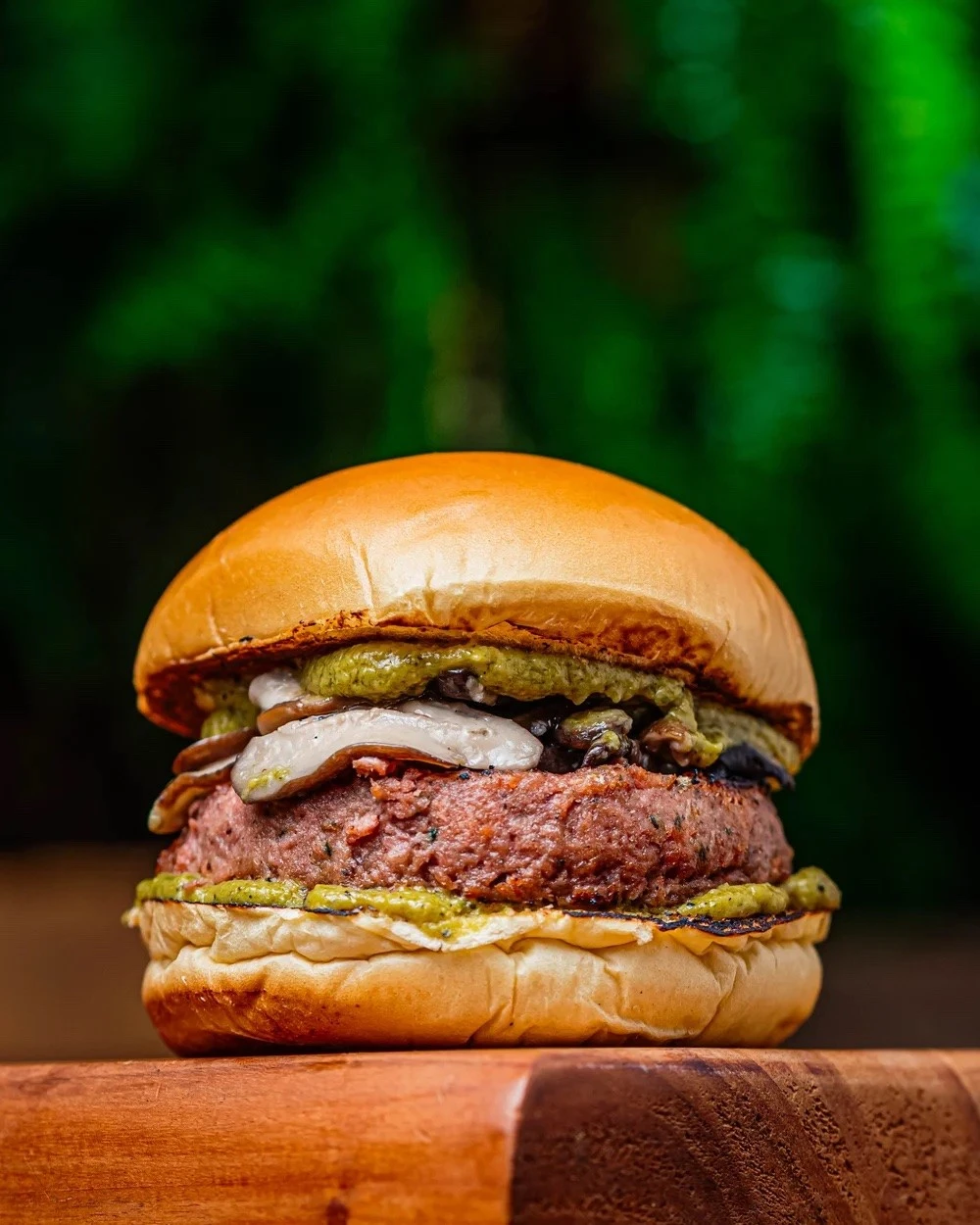
A clock melts over a deserted landscape. A pipe appears alongside the sentence "This is not a pipe". A burger arrives at the table with a name that casts doubt on its own image.
Surrealism always enjoyed displacing familiar objects, creating unexpected associations and turning the everyday into material for the imagination. When that language enters the kitchen, ingredients, names, aromas and presentations begin to tell stories.
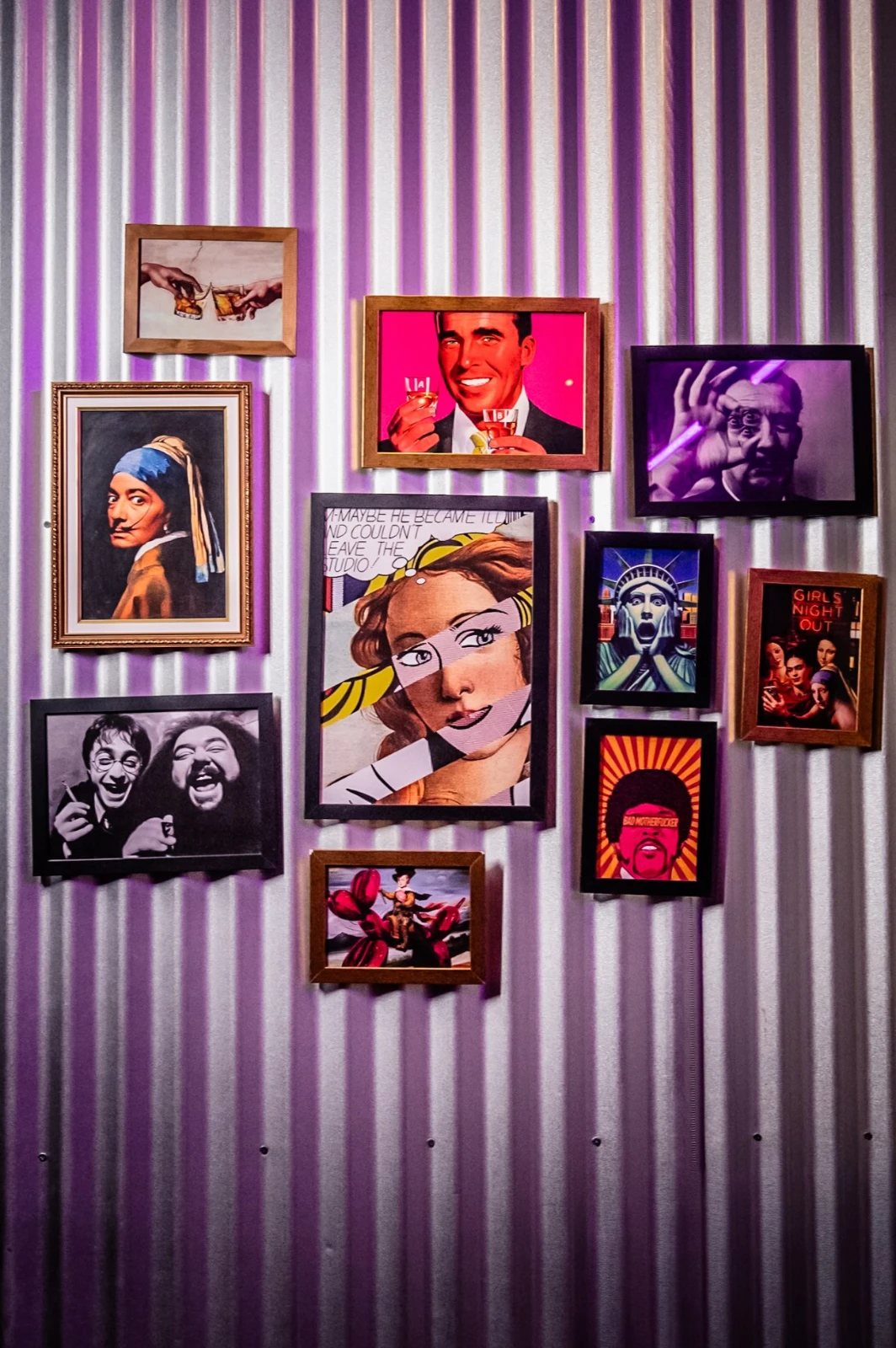
At Surreal, in Botafogo, that encounter shows up in different parts of the house. It is in the dishes inspired by art, in the drinks that reference cinema, in a menu run through by pop culture and in a room where Dalí, Frida Kahlo, Star Wars, Travolta and neon lights share the space without ceremony.
Surrealism took shape in France during the 1920s. The movement formed around artists and writers interested in dreams, the unconscious, chance and the images the mind produces when everyday logic loses control.
André Breton published the first Surrealist Manifesto in 1924. Salvador Dalí, René Magritte, Max Ernst, Joan Miró, Meret Oppenheim and Leonora Carrington are among the names associated with the movement.
Each artist followed a path of their own. Dalí created landscapes of almost photographic precision inhabited by impossible figures. Magritte brought words and images together to raise doubts about what we see. Oppenheim turned a teacup into an object covered in fur. Carrington built universes peopled by creatures, rituals and symbols.
According to the Museum of Modern Art, the surrealists sought to free the imagination and explore regions of the mind that escaped rational thought.
That freedom of association opened room for unlikely encounters. Objects changed function. Scales were altered. Dreams took on concrete shape. Reality was still there, now reorganised by another logic.
Food works with memory, expectation and recognition. Before the first forkful, the brain is already forming hypotheses from a dish's appearance, aroma, name and texture.
That repertoire turns food into fertile territory for surrealism.
An ingredient can look like something else. A familiar recipe can take on an unexpected presentation. A title can completely change the reading of what sits on the plate. The surprise is born from the meeting between something known and an idea that shifts its direction.
The kitchen also mobilises every sense. Colour, temperature, texture, scent, sound and flavour all take part in the composition. The dish can act as image, narrative, memory or provocation.
Salvador Dalí kept an intense relationship with food. The artist used bread, eggs, lobsters, meat and other culinary elements in paintings, sculptures, objects and performances.
In 1973, Dalí published Les Dîners de Gala, a book illustrated with 136 recipes. The pages mix extravagant banquets, theatrical images and dishes of almost fantastical appearance. The publication records the artist’s interest in pleasure, excess and the spectacle built around the table.
Food, in his universe, worked as form, symbol and visual matter. That relationship helps explain why surrealism remains so close to contemporary cooking. Both manage to transform everyday elements through composition.
In 1929, René Magritte painted The Treachery of Images. The work presents a pipe alongside the sentence "Ceci n’est pas une pipe", which means "This is not a pipe".
The statement draws attention to a simple and profound difference. The painting shows the representation of a pipe. The real object stays outside the canvas.
The work became one of the best-known images of surrealism and belongs to the collection of the Los Angeles County Museum of Art.
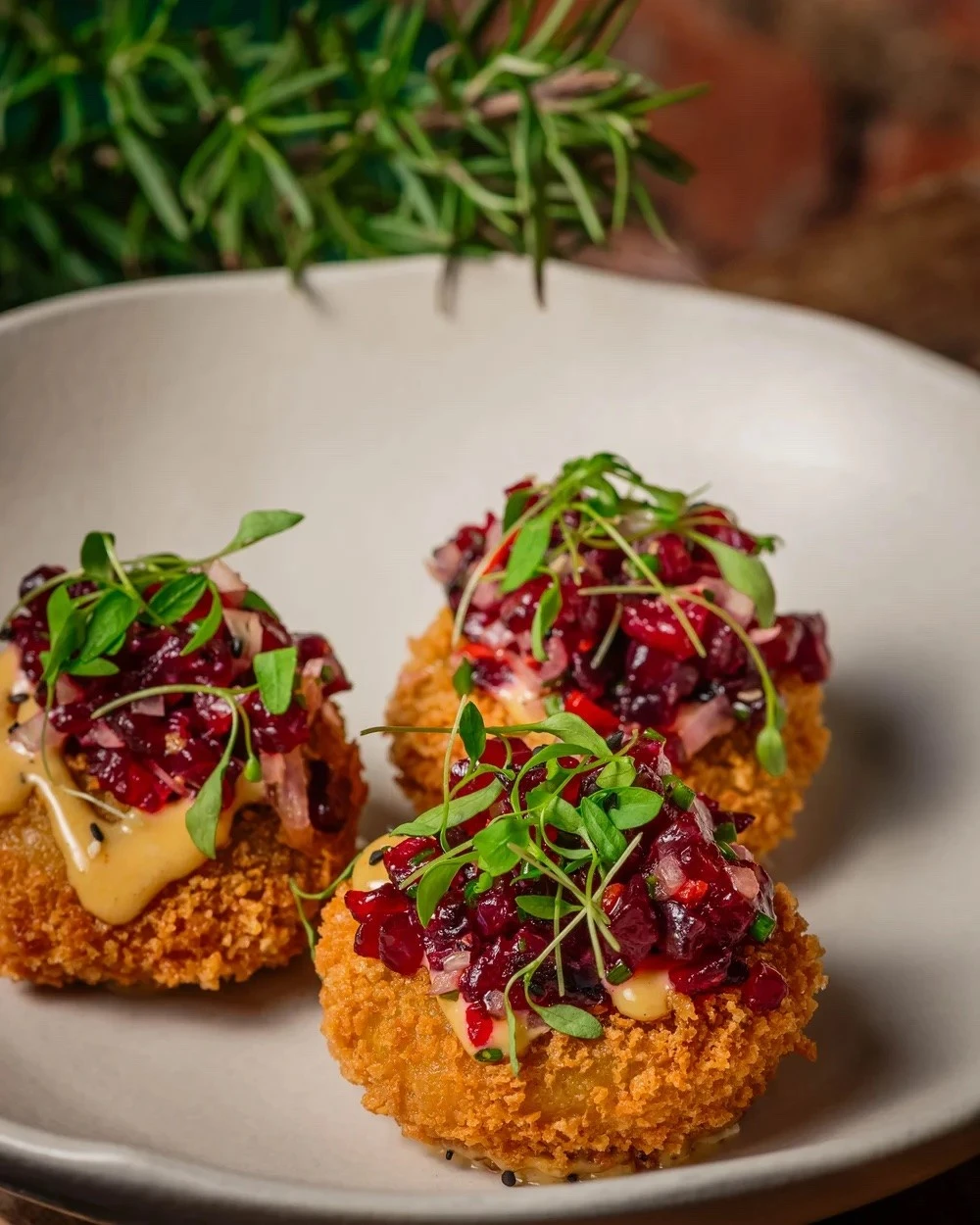
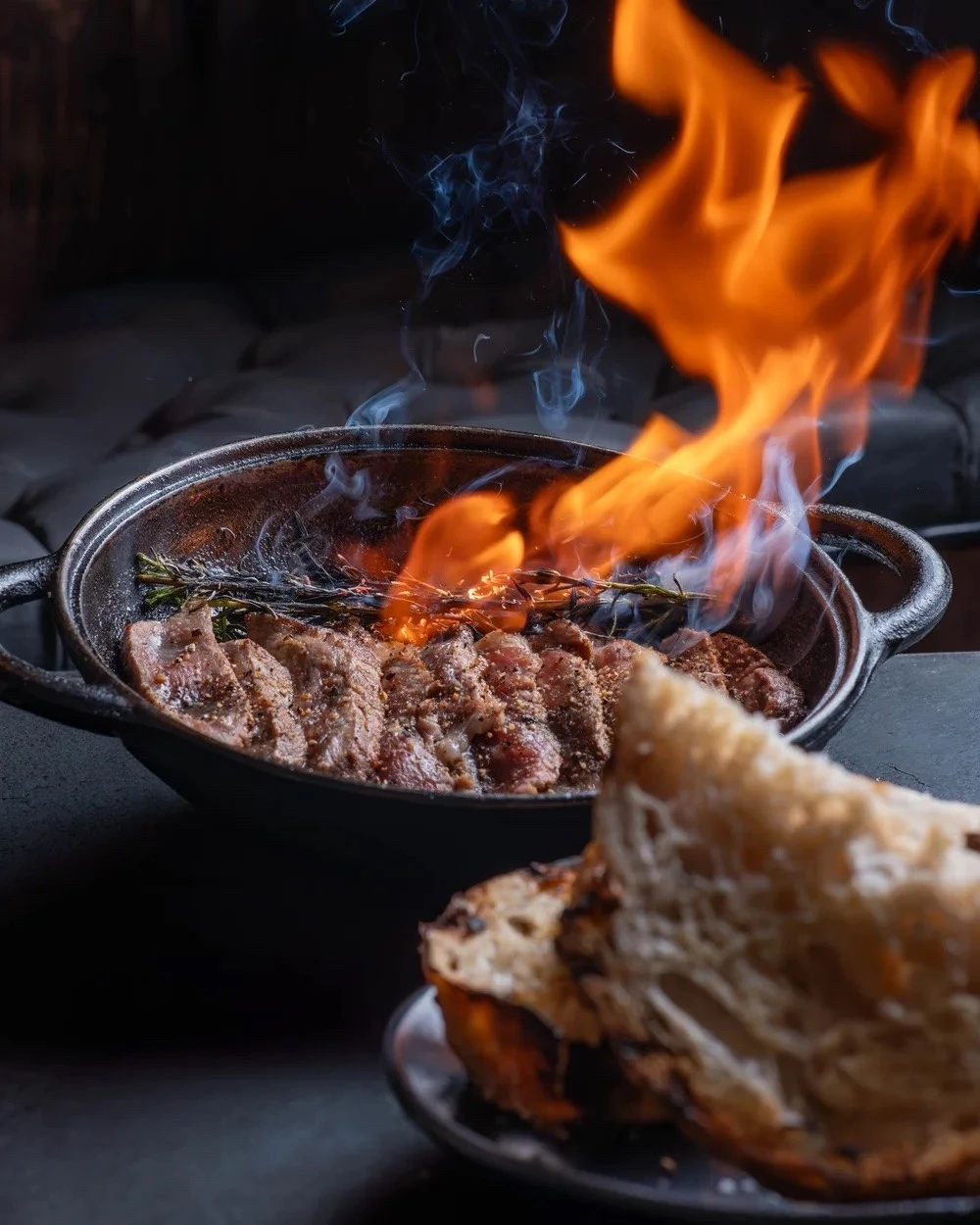
The relationship between surrealism and food takes different forms across the Surreal menu. Each creation picks its own way in: some start with the name, others gain force in the plating, the aroma or the arrival at the table.
Surreal occupies an old house in Botafogo. Exposed brick, neon, artworks, projections and objects tied to pop culture form a setting full of references.
Frida Kahlo and Salvador Dalí appear beside film characters. A Chesterfield sofa shares the space with a stage, lights and projected images. The architecture keeps the feel of a townhouse while the staging creates new paths for the eye.
The space follows the same language found on the menu. Art, cinema, music and food circulate through the rooms and help build the identity of the house.
The Surreal repertoire moves through several cultural languages.
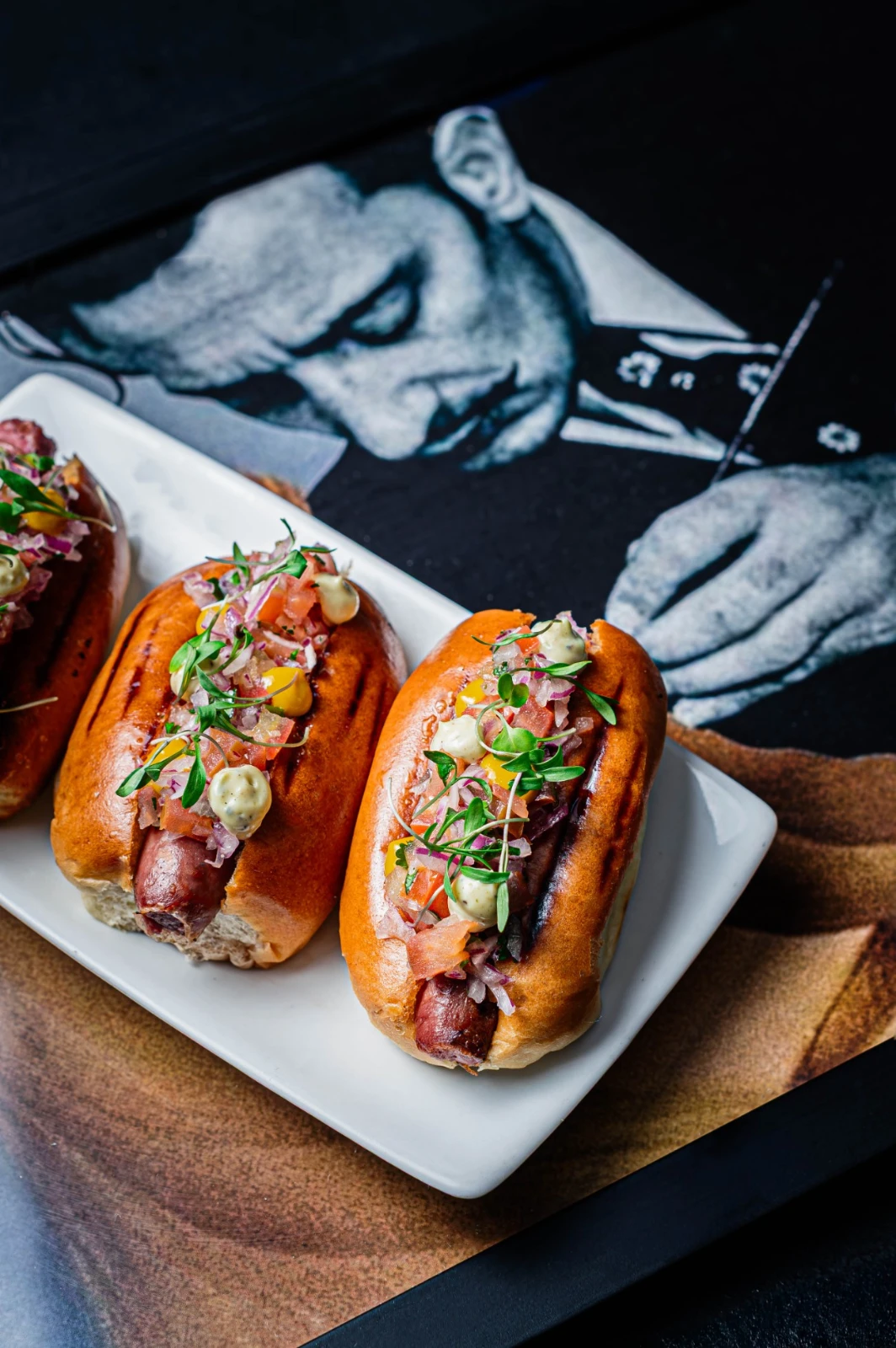
Rib Fiction plays with the title of Pulp Fiction and arrives as two mini smoked-rib sandwiches with semi-cured cheese, house mayonnaise and watercress vinaigrette.
Mushroom Kingdom brings a reference to the Super Mario universe onto the plate. Video games hold an important place in pop culture, and the Mushroom Kingdom became one of its most recognisable settings. On the menu, the reference comes with a linguine in truffle sauce, shiitake and parmesan.
The Comedian Banoffee dessert speaks to contemporary art. The name points to the banana taped to a wall by artist Maurizio Cattelan and turns the reference into a composition of banana, baked dulce de leche, cinnamon crisp, crumble, ice cream and meringue.
On the drinks list, names such as Kill Bill, Branca como a Neve, A Força, Pantera Negra and Stranger Things widen that repertoire. Cinema, series, music, visual arts and video games sit at the same table.
A culinary concept gains strength when flavour, technique and narrative walk together. The reference stirs curiosity. The recipe holds up the choice.
That balance lets the guest recognise a work, find a cultural memory or discover an association during the meal. Each person moves through the menu from their own repertoire.
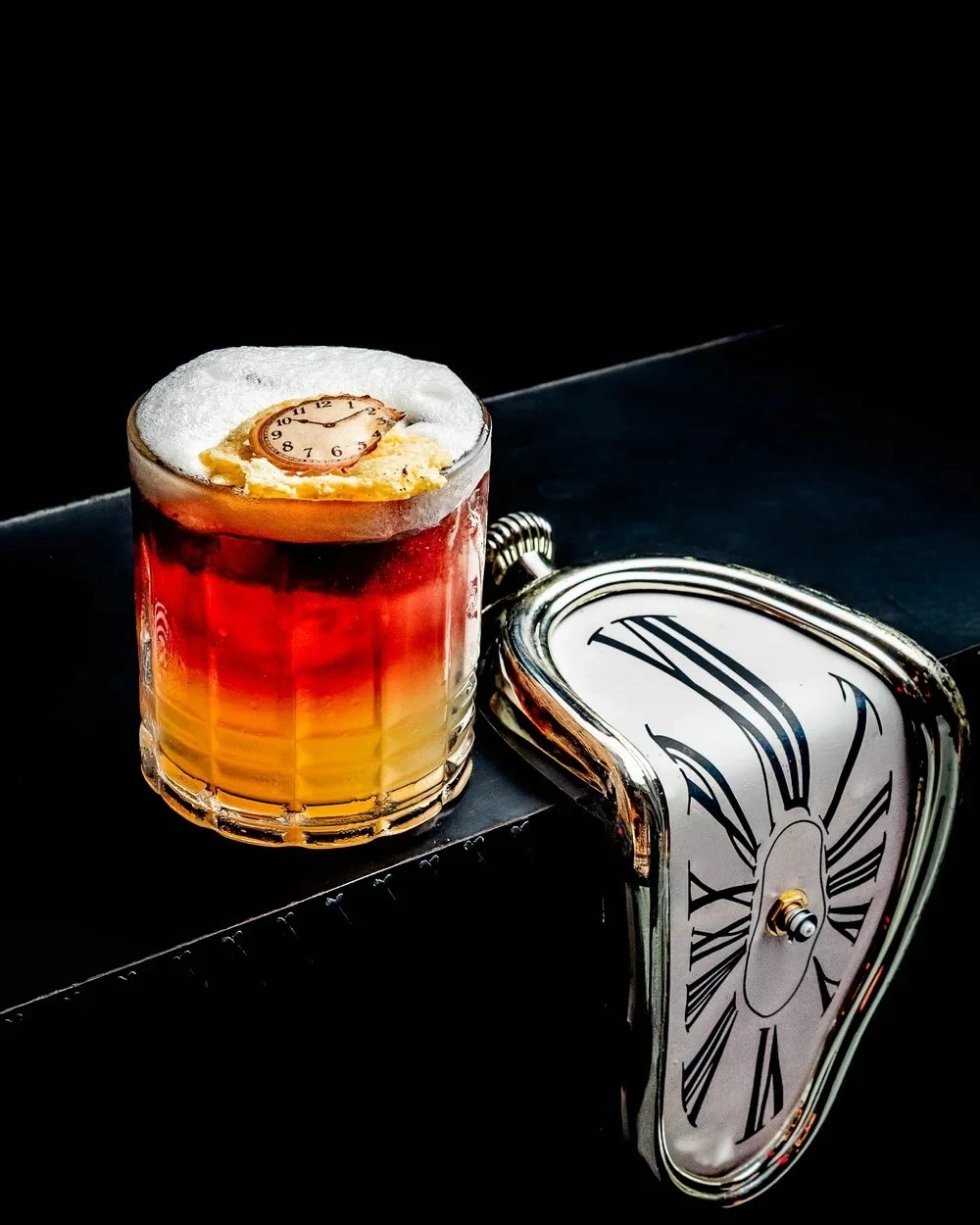
Someone might choose Mushroom Kingdom for its link to Super Mario. Another might arrive at Memória Derretida through the memory of Dalí. And there are those who order for the combination of ingredients and find the reference afterwards.
The table becomes a place of discovery.
The dish feeds the conversation, the memory and the wish to look again.
Surreal takes that mixture into a townhouse at Rua Paulo Barreto, 102, in Botafogo, Rio de Janeiro.
Signature dishes, house cocktails, cultural references and a night-time programme make up what the house offers. The menu stays in motion, with ingredients and creations subject to change.
Reservations can be made through the official Surreal page.
In the end, the link between surrealism and food happens when imagination meets matter. A painting becomes a name. A film inspires a dish. A game runs through a recipe. A drink recovers the image of a melted clock.
And the table takes on another reality.
A melted clock in the form of a drink, a pipe that became a burger and a townhouse where the art does not stay on the wall.
Book a table