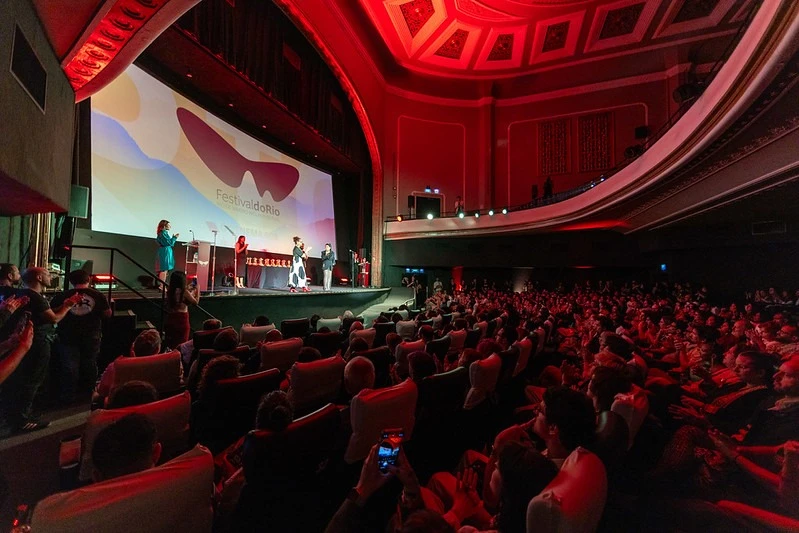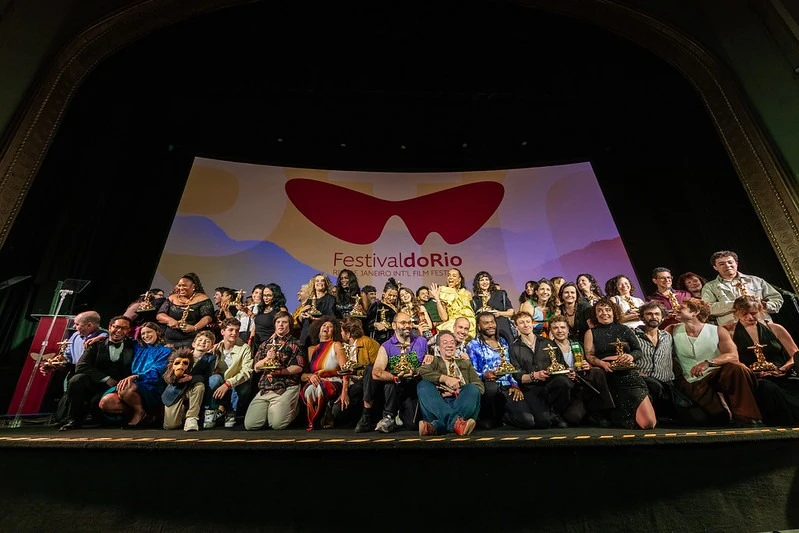

For 11 days, cinemas, cultural venues and places across different neighbourhoods present premieres, competitive strands, documentaries, restored classics, debates and meetings with filmmakers.
For anyone who follows the Surreal universe, cinema is already part of the house vocabulary. Films, characters and pop culture elements appear on the menu, in the communication and in the way the experience is built. In October, that relationship with the screen spreads across the city.
The 28th edition strengthens the presence of Brazilian cinema, gathers international productions and widens the circulation of films through neighbourhoods such as Gávea, Centro, Botafogo, Realengo and Ilha do Governador.
Festival do Rio takes place in different cinemas, letting each person build their own programme.
The gala screenings of the Brazilian competition will be held at Estação Claro Gávea. The next day, the same films get screenings at popular prices, followed by debates, at Cine Odeon, in Cinelândia.
Other strands will screen at Estação Claro Rio, Cinesystem Botafogo and the new cinema at Fundação Getulio Vargas. The programme also reaches Parque de Realengo and Areninha Cultural Renato Russo, on Ilha do Governador, through the Circuito Cine Carioca.
That spread widens the encounter between audiences and films that usually spend little time on the commercial circuit. Some productions reach the festival before their national release and others have their world premiere in Rio.
Première Brasil holds a central position in the programme. In 2026, the strand gathers 110 Brazilian productions selected from almost 1,500 entries.
Of those, 45 features and shorts compete for the Troféu Redentor. The programme also includes 15 world premieres and five Brazilian series.
The Nova Geração strand is one of the new additions for 2026. With six films, the selection presents stories aimed at young audiences and families, dealing with the desires, conflicts and experiences of new generations.
The full list is available on the Première Brasil 2026 page.
The feature competition brings together experienced filmmakers and new names in the field.
Among the confirmed titles is Funk, directed by Aly Muritiba. The film joins the competition after travelling through international festivals and puts Brazilian urban culture at the centre of the narrative.
Vicentina Pede Desculpas, by Gabriel Martins, is also in the selection. The director from Minas Gerais has built a body of work marked by family stories, characters from the periphery and relationships.
Diário do Fogo, by Maju de Paiva and Bernardo Florim, arrives at the festival as a world premiere. The competition also presents Maria de Maria, by Luiza Shelling Tubaldini, and Oceânico, by Guilherme Coelho.
The variety of approaches helps show the current paths of Brazilian fiction, with productions from different regions made by independent outfits, established production companies and international co-productions.
The documentary selection gathers personal stories, artistic journeys and questions tied to contemporary Brazil.
Elza, directed by Eryk Rocha, offers a new reading of Elza Soares and her presence in Brazilian culture.
O Sertão das Nossas Memórias, by Lucia Murat, joins the competition as a world premiere. The director's work is tied to political memory, human rights and the investigation of Brazilian history.
Also confirmed are Alucinação, by Renato Terra, Marcos Caetano and Leo Caetano, Cão Sem Plumas, by Camila Valença, and A Extraordinária Vida de Vera Valdez, by Fabio Meira.
After some screenings, filmmakers, crew and cast take part in debates. These meetings offer a look at decisions about script, research, production, cinematography and editing.
Feito Pipa, directed by Allan Deberton, gained new prominence before the festival opened. The feature was chosen to represent Brazil in the race for a place at the 2027 Oscars.
The story follows Gugu, a boy living with his grandmother in the sertão of Ceará. The film deals with childhood, family, affection, identity and loss, with Teca Pereira, Yuri Gomes and Lázaro Ramos in the cast.
The production has already been to the Berlin and Gramado festivals and will screen at Festival do Rio before reaching Brazilian cinemas. The choice to represent the country was announced on 16 September by the Brazilian Academy of Cinema.
The international programme presents films that have been to festivals such as Cannes, Berlin, Venice, Sundance and Toronto.
Among the highlights is Josephine: Fragmentos de um Crime, a drama directed by Beth de Araújo and awarded at Sundance. The gala screening is set for 9 October, at 7.30pm, at Cine Odeon, with the director present.
The programme also includes Club Kid, Jordan Firstman's feature directing debut, and the animation Jim Queen, by Nicolas Athané and Marco Nguyen.
The Expectativa and Première Latina strands widen that picture. The first gathers eagerly awaited productions, while the second presents different perspectives on Latin American cinema.
A long programme allows for different routes. Visitors can choose titles by origin, genre, strand or theme.
Anyone wanting to follow Brazilian production can start with Première Brasil. Those interested in new directors will find films in the Novos Rumos competition.
Running time can help with the choice too. Shorts allow several productions in a single session. Features followed by debate ask for a longer gap in the schedule.
The Festival do Rio 2026 films page has filters that make searching easier.
Botafogo takes part in the programme through Cinesystem Botafogo, Estação Claro Rio and the new cinema at Fundação Getulio Vargas.
The presence of several venues in the neighbourhood reinforces its historic relationship with cinema, film clubs, production companies and the cultural life of Rio.
Through the festival, residents and visitors will be able to combine screenings at different times and follow debates with the film teams. The full grid will show which productions screen in each room.
At Surreal, the cinematic references carry on at the table. The menu turns titles, characters and scenes into names, compositions and stories that bring cinema and food together.
Between 1 and 10 October, Festival do Rio also runs RioMarket, its area devoted to the audiovisual industry.
The programme takes place at Armazém da Utopia, in the port area, and includes talks, seminars, workshops and professional meetings. Producers, students, companies, distributors and professionals from different fields find opportunities for training and project development.
RioMarket shows the economic dimension of cinema. Before a film reaches the screen, there is a chain made of script, production, financing, shooting, editing, distribution, communication and exhibition.
Individual tickets can be bought on the festival website, on Ingresso.com and at the box offices of participating cinemas. The packs work through individual codes, used to redeem tickets for the chosen screenings.
The full conditions are available on the official Festival do Rio tickets page.
Programme and screenings on the official Festival do Rio website. Tickets on the festival site, on Ingresso.com and at the box offices of participating cinemas.
Eleven days of screenings. The whole city becomes a cinema.
Rib Fiction, Los Pollos Hermanos, Kill Bill. At Surreal, the closing credits are only the start of the conversation.
Book a table