
How we perceive a dish comes from the combination of taste, smell, sight, touch and hearing. Volume, frequency, rhythm and memory can steer attention towards particular features of the food.
The aroma prepares the first forkful, the presentation creates expectations, the texture appears while chewing, and sound helps the brain interpret the whole experience.
This relationship is studied in fields such as experimental psychology, neuroscience and sensory science. The findings help explain why the same recipe can produce different experiences depending on where it is served.
The gustatory system identifies five basic tastes: sweet, salty, sour, bitter and umami. Flavour brings that information together with aroma, temperature, texture and other stimuli present during the meal.
Much of what we call flavour depends on smell. Hearing also contributes to the interpretation, especially through the sounds the food makes and the environment around the table.
Perception happens as a whole. The brain organises the stimuli and builds an experience that is unique to each person.
The idea known as sonic seasoning describes situations in which music or soundscapes shape the way we perceive food and drink.
Research has observed recurring associations between sound features and tastes.
A study published in 2012 in Food Quality and Preference showed that changing the properties of a soundtrack could steer participants' attention towards sweet or bitter features of a food.
These associations work as sensory cues. Music sets up expectations and highlights certain elements of the experience.
A study published in June 2026 in Scientific Reports investigated how the brain responds to the combination of music and taste.
The research gathered 28 participants, who were given sweet and sour solutions while listening to tracks composed to convey features matching or differing from those tastes.
Functional MRI scans indicated greater activation in gustatory and sensorimotor regions when music and taste were presented together, compared with tasting alone.
The combinations considered compatible received higher ratings for congruence and pleasantness. The perceived changes in the intensity of the tastes were slight.
The study reinforces the multisensory character of eating. The presence of music takes part in how the brain processes the experience, while individual responses still vary.
A delicate, high-pitched track can prepare the brain to find lightness, freshness or sweetness. Low, dense and slow sounds can suggest deep, toasted or bitter flavours.
Expectation shapes attention. When music steers the listener towards a particular feature, that sensation can stand out during the tasting.
Repertoire, emotional memory and familiarity with the genre also play a part. A song tied to family gatherings can bring warmth. Music discovered on a trip can bring back places, smells and conversations.
Each person comes to the table carrying a sensory repertoire of their own. That is why the research shows collective tendencies alongside individual differences.
A study published in 2019 found consistent associations between sounds and tastes, but no specific changes in how the quality of the taste was perceived. The result suggests that recognising a match between music and flavour does not necessarily produce a strong change in taste.
The effect of sound involves the intensity of the environment.
A study with 48 participants simulated the noise of an aircraft cabin. Under loud sound, the perception of sweetness fell and the perception of umami rose. The results were published in the Journal of Experimental Psychology.
The context of the study was specific and used intense noise, unlike a live performance in a restaurant. Even so, the research shows how volume can interfere with the attention given to flavour.
In a dining space, the sound balance is also part of the comfort. The music has to coexist with conversation, service, movement and the sounds of the food itself.
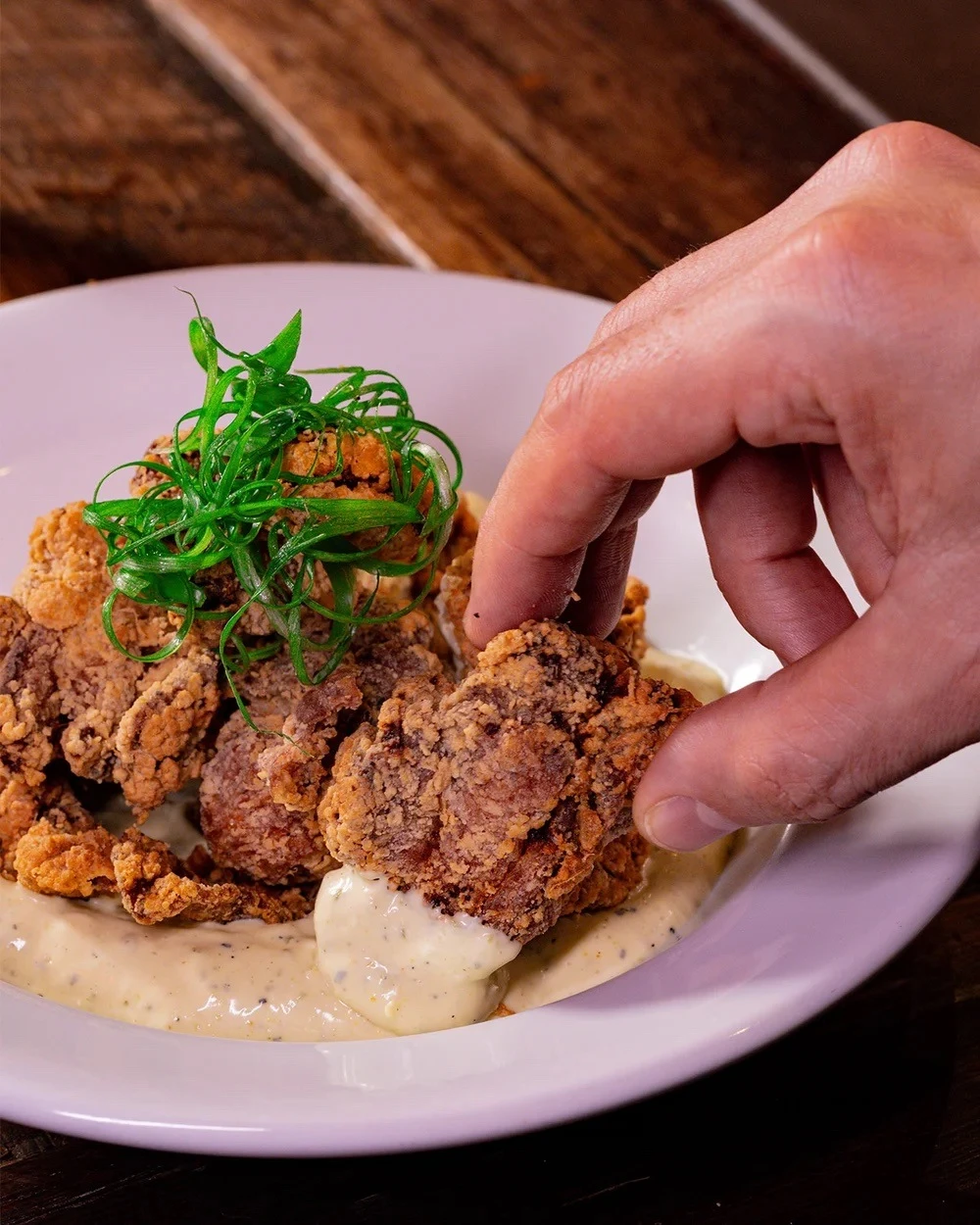
The sound of a crust being cut, of a crisp chip, of breading breaking and of meat arriving at the table all contribute to the perception of texture.
In a classic experiment, researchers altered the sound participants heard as they bit into potato chips. Louder sounds at certain frequencies made the food seem crunchier and fresher, even though every chip was identical. The study was published in the Journal of Sensory Studies.
The ear confirms what the teeth and the tongue are feeling.
This relationship shows up in breaded dishes, toasted breads, fresh vegetables and food finished over coals.
Musical features affect the rhythm of the experience. Conversation, how long people stay and the attention given to the plate all follow the mood the music builds.
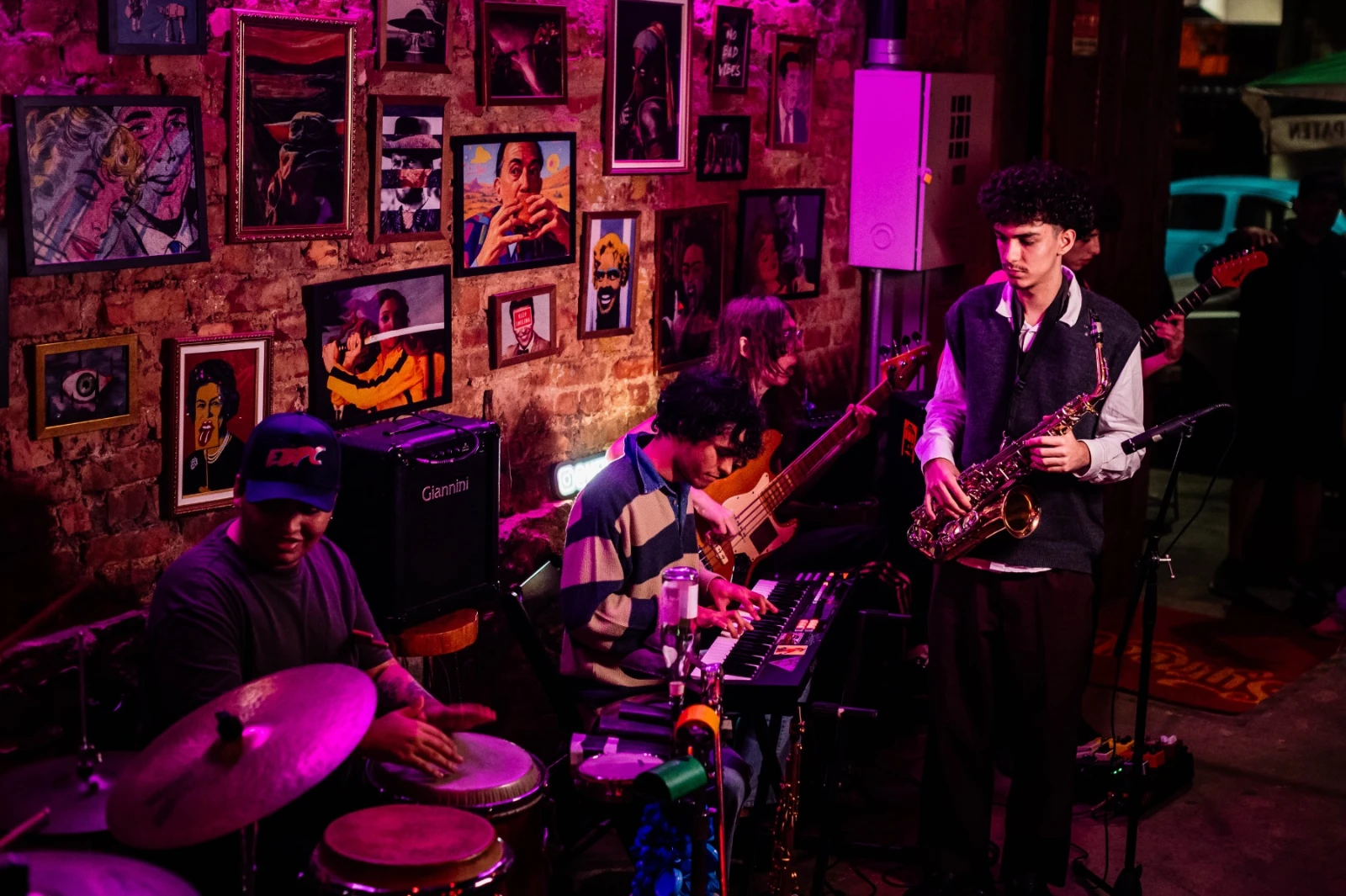
At Surreal, music has been part of the townhouse's identity since 2019. The stage sits inside the dining room, surrounded by references to cinema, surrealism and pop art.
The house's music programme presents different propositions across the week.
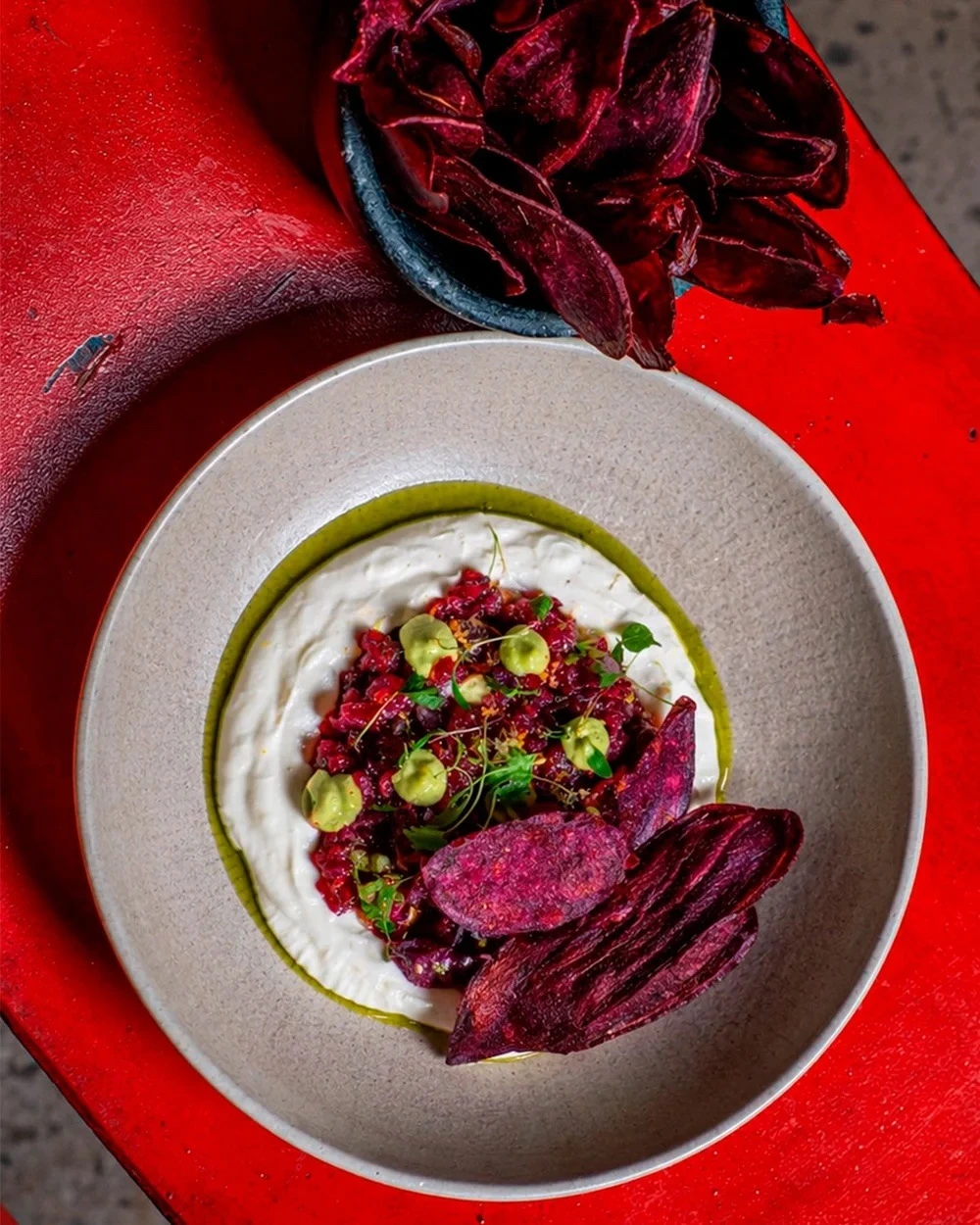
On these nights, food and music share the same space. A dish like the Ancho in Flames brings together aroma, heat, movement and the sound of the cooking reaching the table. The Rib Fiction adds the texture of the smoked rib and the bread. The La La Land works with colour, acidity and visual delicacy.
The soundtrack accompanies this sensory information and helps build the rhythm of the night.
To find other places devoted to these genres, see also the guide on where to hear jazz and blues in Rio de Janeiro.
At your next meal with live music, it is worth noticing a few details.
Notice how your first impression of the dish relates to the music playing. Pay attention to the volume, the rhythm, the instruments and the atmosphere in the room.
Listen to the food as well. Crunch, cutting, fizz and contact with the crockery all give information about texture and temperature.
Music takes part in the dining experience through attention, expectation and memory. Each night creates its own combination between what reaches the ear and what stays on the palate.
Surreal is at Rua Paulo Barreto, 102, in Botafogo, Rio de Janeiro.
The schedule can change and may include special acts. Check the latest programme and make your reservation. On live music nights, check the start time and the current cover charge in advance.
The dish reaches the palate. The soundtrack gets there first.
Four nights, four different moods for the same kitchen. Book your table in the townhouse at Rua Paulo Barreto.
Book a table