
An ingredient changes personality entirely when it meets the right technique. Fire adds aroma and intensity. Curing concentrates flavour and alters texture. Fermentation develops acidity and complexity.
Smoking leaves a deep mark, recognised before the first bite.
These techniques run through different Surreal creations. They show up in the flaming rosemary, the beet-cured fish, the kimchi, the smoked rib and the house-made pastrami.
The result arrives in dishes that catch the eye first, then the nose and, finally, the palate.
Original cooking starts with the choice of ingredients and moves on through the transformations applied to each one.
Time, temperature, salt, smoke and microorganisms change colour, scent, texture and intensity. Each process leaves visible signs on the plate.
On the Surreal menu, these techniques appear inside recipes drawn from cinema, art and pop culture. The reference helps build the story. The preparation decides the flavour that stays.
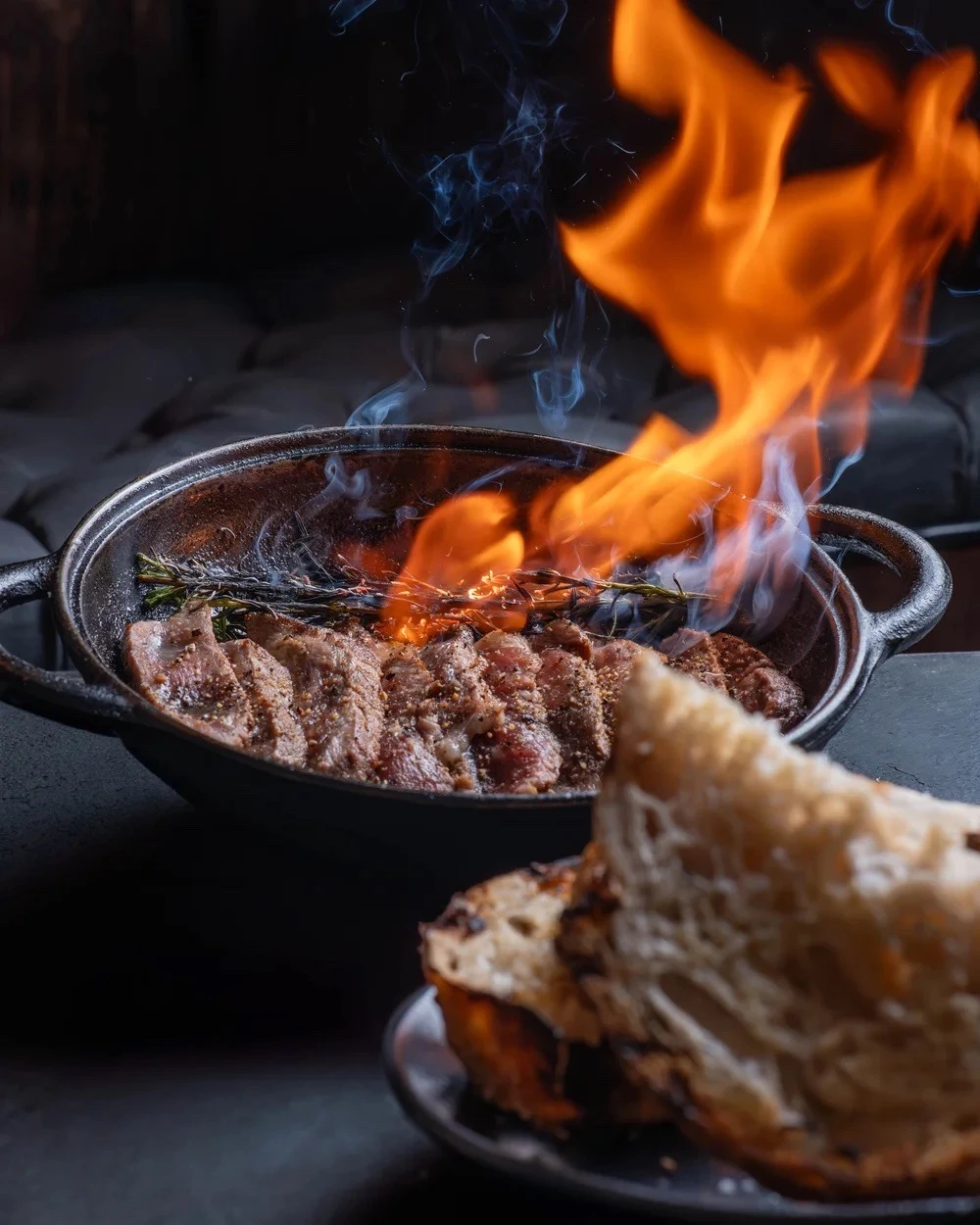
The Ancho in Flames brings ancho steak served with roti sauce and flaming rosemary. It comes with focaccia or rustic potatoes.
The flame is part of the presentation when the dish reaches the table. The heat meets the rosemary and spreads its scent around. For a few moments, the dish also fills the space with light, movement and perfume.
Fire has a long history in cooking. It works on forming crusts, concentrating flavour and developing heat-related aromas. Each method produces a different result, whether over coals, in a pan, in the oven or in front of a flame.
In the Ancho in Flames, the lit rosemary widens the sensory dimension of the arrival. The roti sauce adds depth, while the meat holds the centre of the composition.
The technique also speaks to the Surreal setting. Lights, projections and music accompany a dish that arrives with a scene of its own.
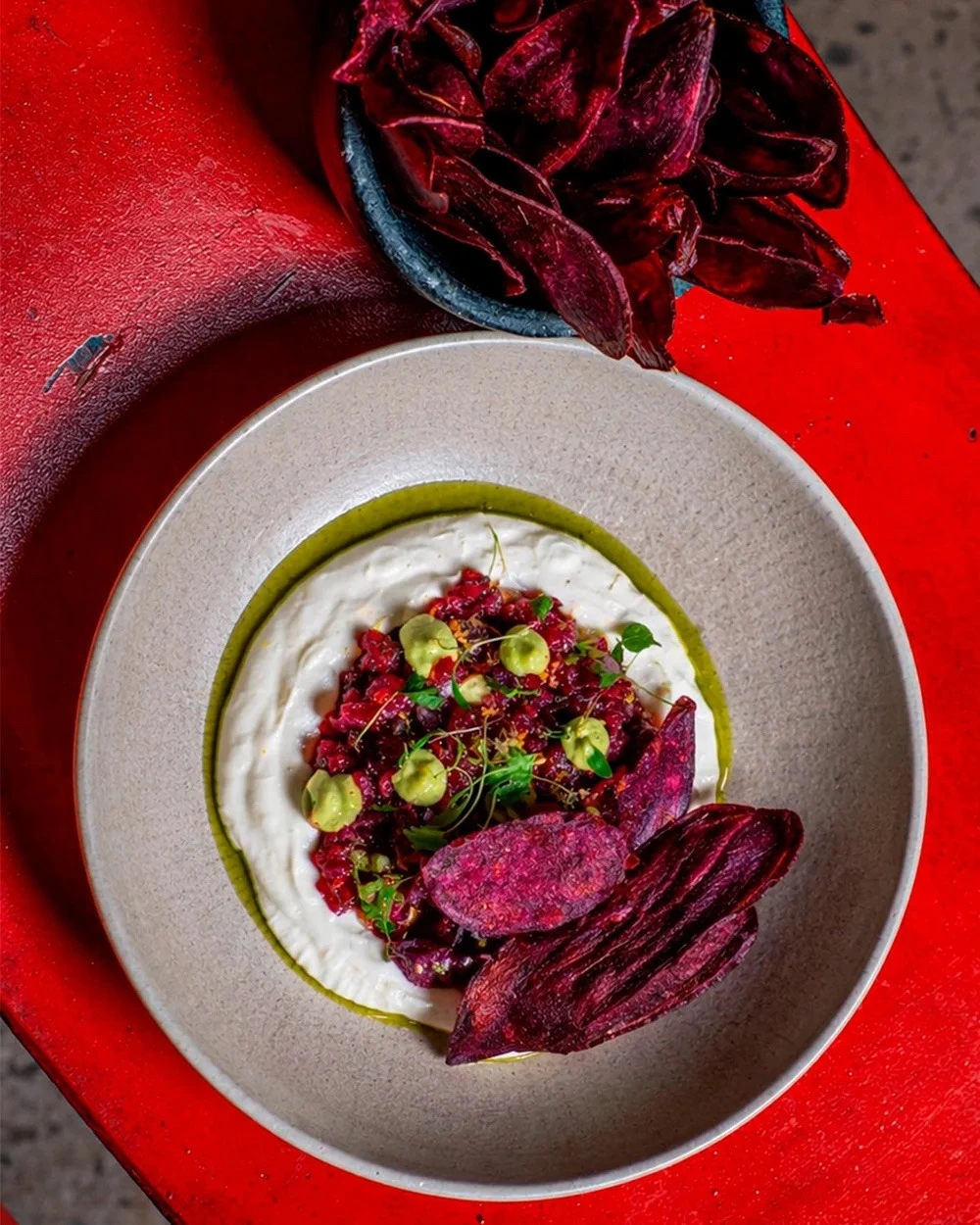
The La La Land presents beet-cured fish, sour cream, avocado aioli and green olive oil, served with purple sweet potato chips.
Curing transforms the surface and the texture of the fish. Broadly, the process uses ingredients such as salt, sugar and seasoning to draw out part of the moisture and concentrate flavour. Time plays a direct part in the result.
The sour cream and the avocado aioli bring creaminess. The chips add crunch. The acidity organises the flavours and accompanies the delicate texture of the fish.
Curing makes it possible to work the ingredient precisely, with attention to the cut, the timing and the proportion of each element used.
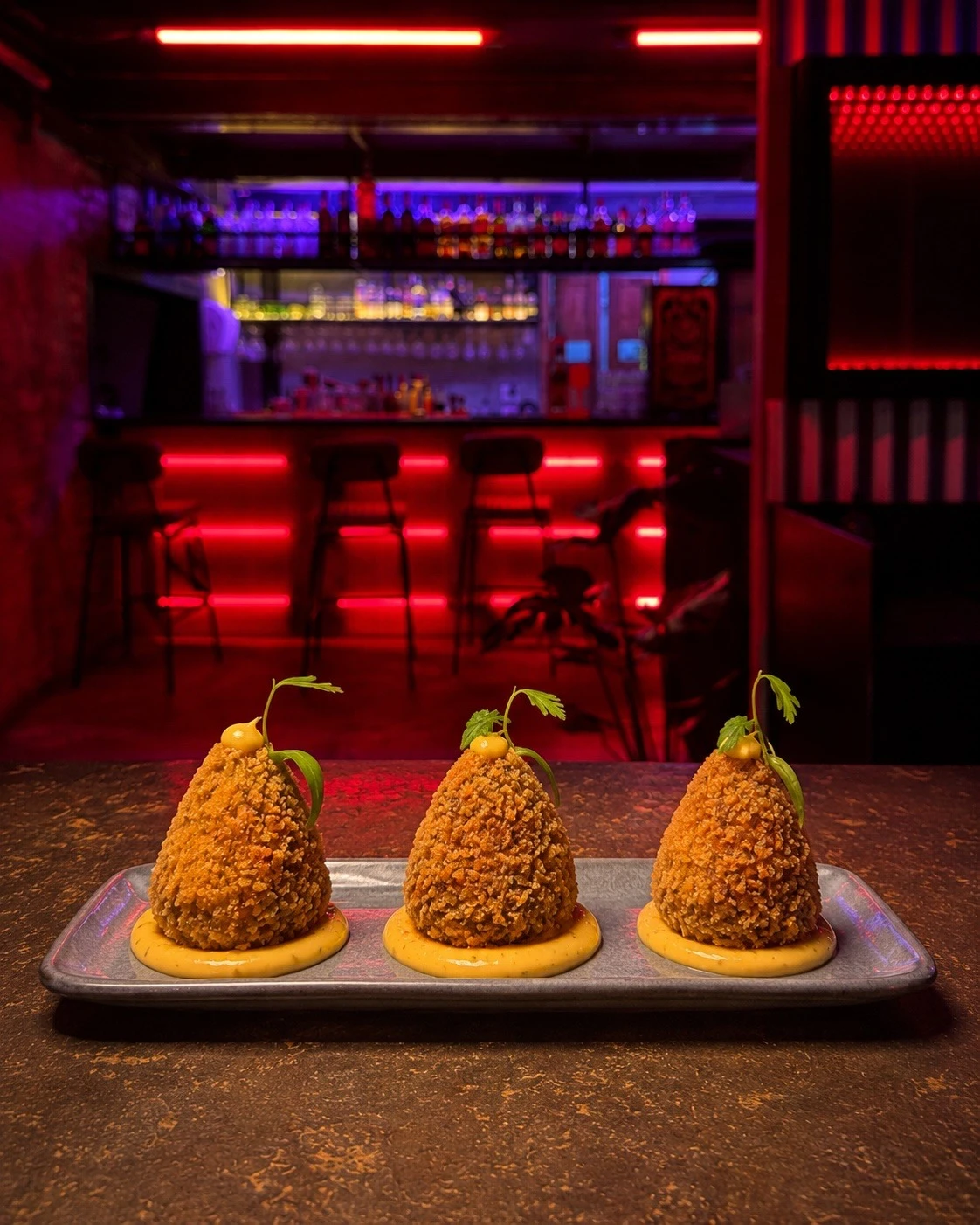
The Carnivorous Flower brings more than one technique together in the same starter.
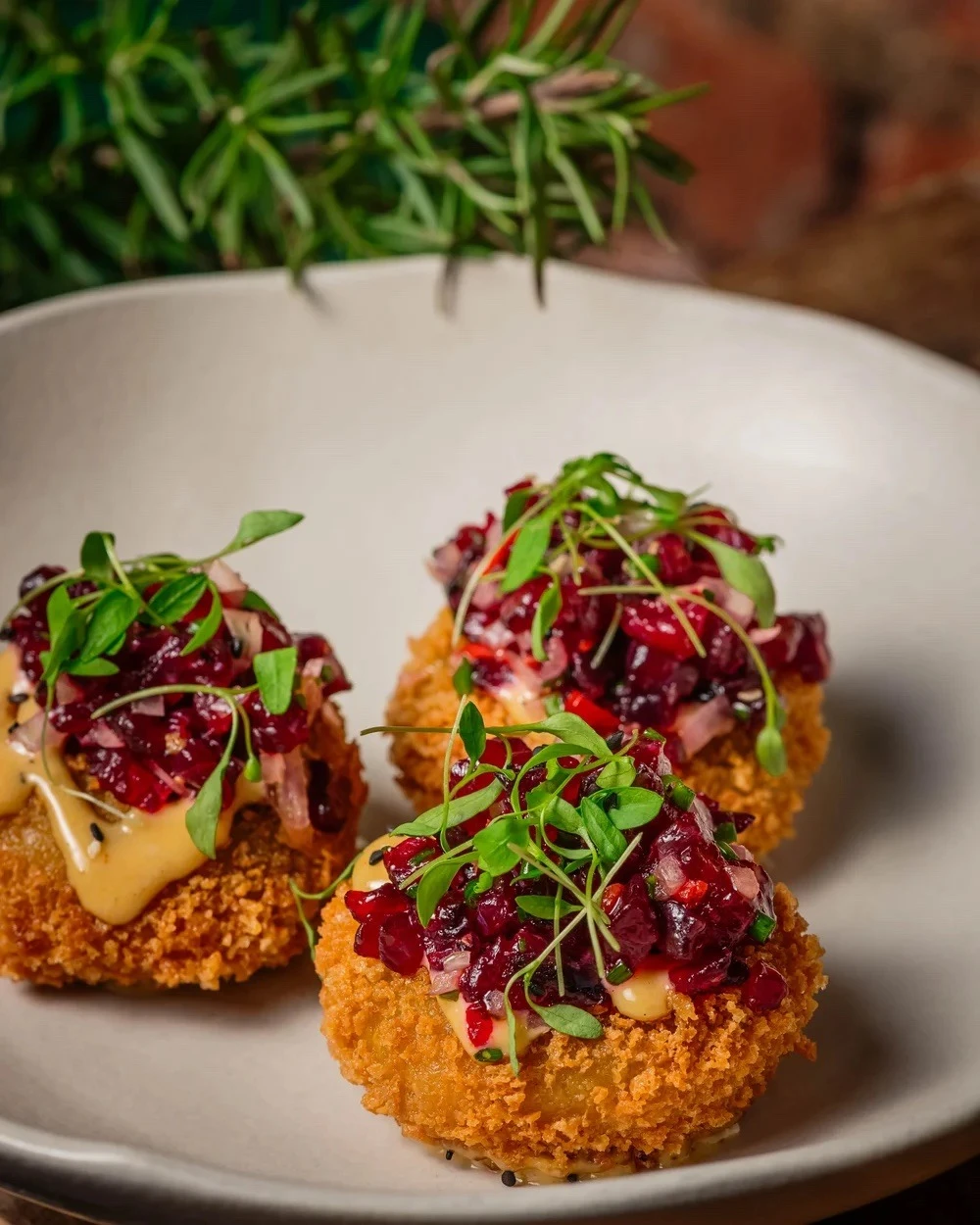
The recipe takes cauliflower croquettes with semi-cured cheese and kimchi, topped with beet-cured fish, a citrus touch and sriracha mayo.
The base arrives hot and crisp. The fish adds freshness and colour. The kimchi brings acidity, intensity and a fermented profile. The citrus touch draws the different elements together.
Fermentation happens through the action of microorganisms, such as bacteria and yeasts, on the components of the food. During the process, acids, gases and other compounds appear, responsible for new aromas, flavours and textures.
The National Center for Home Food Preservation lists kimchi among the foods tied to this culinary tradition. Fermentation is also present in breads, cheeses, drinks and preserves made in many parts of the world.
In the Carnivorous Flower, the kimchi takes part as a point of acidity and personality. Its presence accompanies the cauliflower, the semi-cured cheese, the sriracha and the cured fish.
Every bite runs through temperature, crunch, creaminess, acidity and heat.
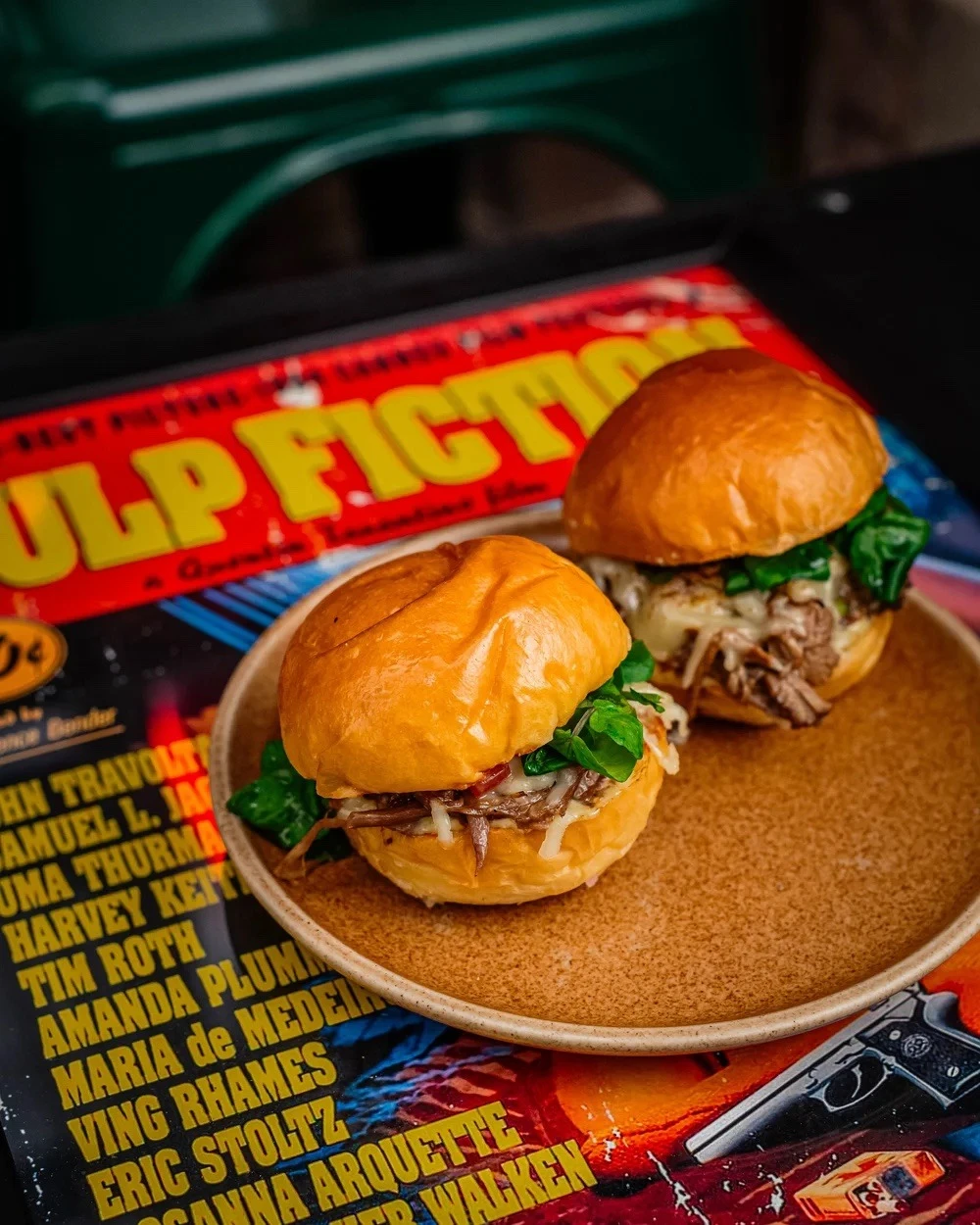
The Rib Fiction arrives as two mini smoked rib sandwiches, house mayo, melted semi-cured cheese and watercress vinaigrette.
Smoking exposes the food to smoke produced by the controlled burning of wood or other materials suited to cooking. The process can take part in the cooking, the preserving and the building of aroma.
According to the National Center for Home Food Preservation, curing and smoking have a long relationship with preserving food and with developing concentrated flavour.
The smoked rib carries an easily recognised aroma. The melted cheese adds creaminess, while the watercress vinaigrette brings freshness to the composition.
The name refers to Pulp Fiction. The smoke helps complete the atmosphere of the recipe before the first bite.
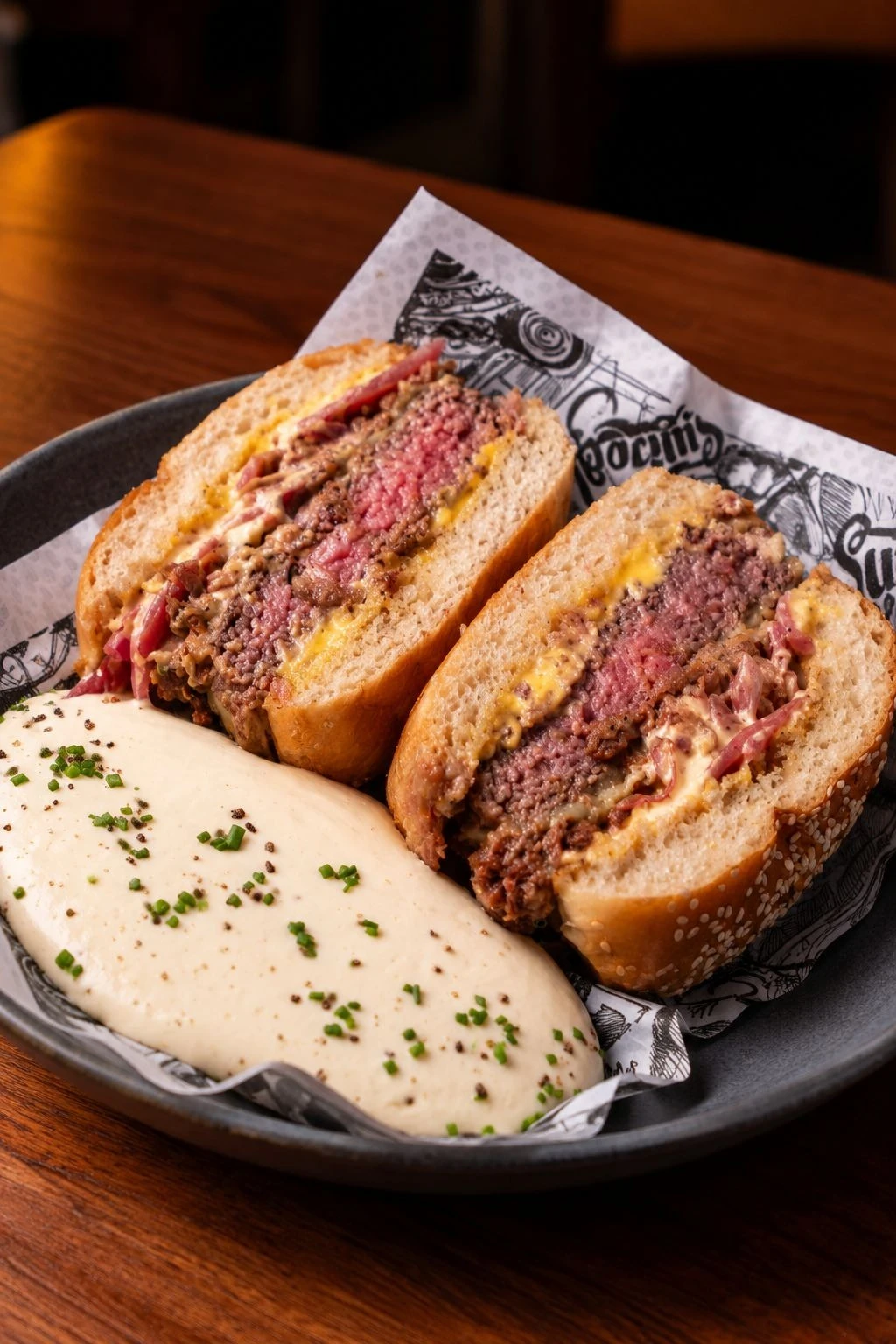
Pastrami is not a technique, it is the result of two: curing and smoking. At Surreal, the house pastrami goes through 10 days of curing and 12 hours of smoking. The result has concentrated flavour, a striking scent and a texture of its own.
At Surreal, it appears in two current creations.
The pastrami creates a layer of flavour between the meat, the cheese and the acidity of the pickle. The sriracha adds heat and the foam extends the presence of the cheese on the plate.
Ten days of curing and twelve hours of smoke: time and technique take a direct part in this result, with stages that demand planning and control in the kitchen.
Looking at the techniques helps you find flavours closer to what you like.
Reading it this way turns the menu into a map of flavours. Fire, curing, fermentation and smoke point the way to each creation.
Original cooking uses technique, repertoire and intent to build a recognisable identity.
At Surreal, cinema and pop culture help name the dishes. The cooking processes hold up what reaches the table. Curing decides the texture of the fish. Fermentation gives the kimchi its force. The smoke stays in the rib. The fire goes with the rosemary and changes the atmosphere around the ancho.
That meeting lets a cultural reference take on flavour, aroma and texture.
A guest may arrive through the name of a film, the image of a dish or the technique described on the menu. The kitchen carries the rest of the story.
Surreal is at Rua Paulo Barreto, 102, in Botafogo, Rio de Janeiro.
The dishes and the availability of ingredients can be checked on the Surreal digital menu.
Bookings for up to six people are made on the official reservations page. Larger groups are handled by message on the house WhatsApp.
At Surreal, each technique leaves a clue. Some arrive through the aroma. Others appear in the colour, the acidity or the texture.
All of them lead to the plate.
The lit rosemary, the beet-cured fish, the kimchi, the smoked rib and the house-made pastrami are waiting in the townhouse at Rua Paulo Barreto.
Book a table